Fireline Commentary | Trump Returns to China After Nine Years: The Transformation of US-China Relations
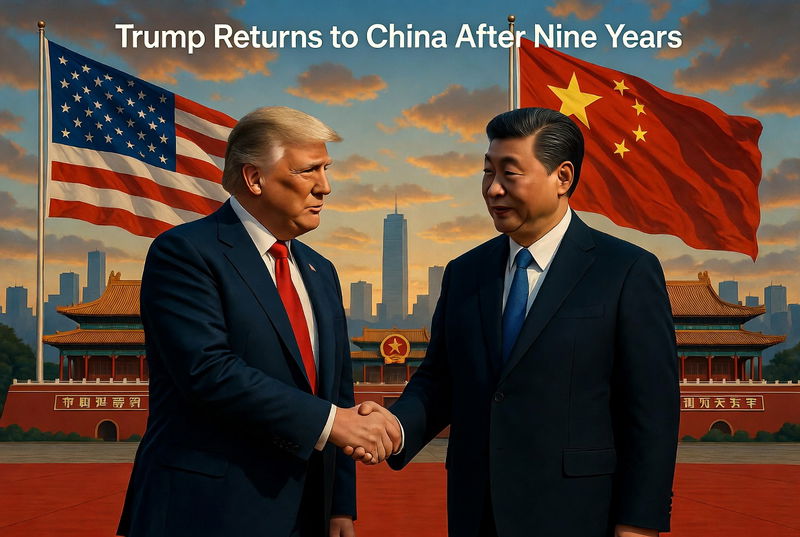

Nine years after his last visit, Donald Trump — the 45th and 47th President of the United States — is once again heading to China. This trip marks the longest interval between two visits to China by any American president in the history of US-China relations.
During the Biden administration, which bridged Trump’s two terms, no state visit to China occurred. Due to COVID-19 travel restrictions and incidents such as the 2023 spy balloon episode, Biden became one of the few US presidents since the establishment of diplomatic relations in 1979 (along with Jimmy Carter) who never visited China while in office.
This makes Trump’s return particularly significant. The man who once dramatically reshaped the trajectory of the world’s most important bilateral relationship is now revisiting China in a vastly different global landscape.
### A Changed World
When Trump first visited China in November 2017, the United States still approached the relationship with a sense of hegemonic superiority. China was viewed primarily as a rapidly rising challenger. Nine years later, the power dynamics have shifted noticeably.
The United States faces multiple simultaneous challenges: stalled tariff strategies, widening cracks among allies, high debt and inflation, spillover from Middle East conflicts, and deepening domestic political divisions. Meanwhile, China has strengthened its strategic position in new energy, artificial intelligence, high-end manufacturing, rare earth supply chains, and global trade resilience.
As one American media outlet put it bluntly, China has effectively neutralized many of the cards Trump once held. The visit comes at a time when Washington appears to be seeking stability rather than dominance.
### Key Issues on the Table
Beyond bilateral trade and economic matters, the summit between the two leaders is expected to address major strategic issues affecting global stability — including the Iran conflict, energy security, Taiwan, artificial intelligence governance, and regional security.
Chinese officials have emphasized that the meeting will be guided by the principles of equality, mutual respect, and mutual benefit, aiming to expand cooperation while managing differences, and injecting greater stability into a turbulent world.
### Strategic Context
This visit is widely seen as carrying a degree of necessity for the US side. With ongoing tensions in the Middle East impacting global energy markets and American consumer prices, stabilizing relations with China has become a pressing priority.
Analysts note that Trump appears to have learned a key lesson from his first term: while tariffs and sanctions can inflict pain, they often provoke strong countermeasures and have limited long-term effectiveness in forcing concessions from China.
### Looking Ahead
Trump’s second visit to China will not likely produce dramatic breakthroughs, but it represents an important opportunity for the world’s two largest economies to recalibrate their relationship in a new era. The tone and outcomes of this summit could set the direction for US-China relations for years to come.
In an increasingly multipolar world, how Washington and Beijing choose to compete, coexist, and cooperate will continue to shape global affairs

Comments
No comments yet. Be the first to comment!